Nobody warns you about the quiet.
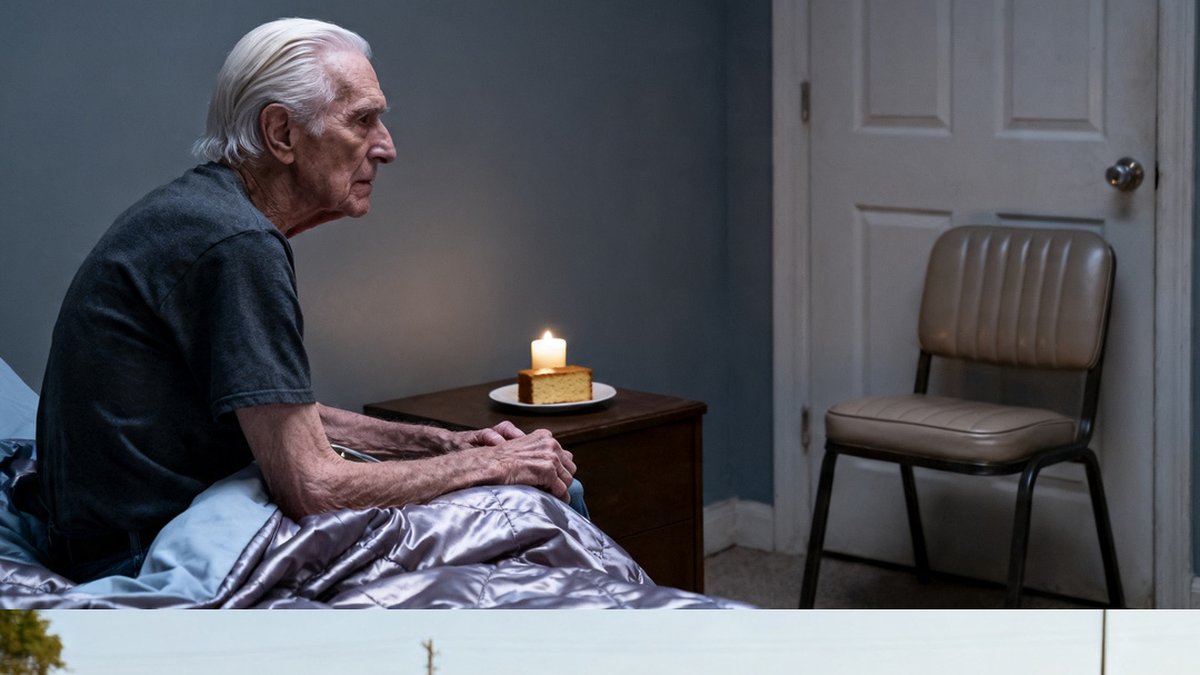
My eighty-ninth birthday was last Tuesday. Want to know what I did? I sat by the window in my room at the Sunset Ridge Assisted Living over in Carthage, Missouri, and watched a man in a Ford F-150 change his windshield wipers in the parking lot. Took him about eighteen minutes. That was the highlight. Around seven in the evening, Rosa, one of the night aides, brought me a square of cornbread with a candle stuck in it. She sang “Happy Birthday” all the way through, didn’t rush a single word. She has a pretty voice, a little raspy from smoking. She calls me Mr. Harlan. She’s the only person who called me by name that whole day.
I used to teach band at the high school over in Joplin. Forty-three years. Trombone was my main instrument, but I could make any brass instrument sing loud enough to rattle the gymnasium rafters. Hundreds of kids passed through my classroom. Hundreds. They’d come in squeaking and squawking, and I’d shape them into something that sounded like music. Gave them discipline. Gave them pride. Friday night football games, marching onto that field with the lights hitting the sousaphones, that rumble in your chest—there’s nothing like it. You feel like you’re part of something bigger than yourself.
I come home to a woman named Dottie and two kids. A split-level out on Baker Road with a big oak tree in the front yard and a basement I finished myself. Dottie kept the kitchen smelling like cinnamon and coffee. She’d stand at the counter rolling out pie dough while Travis, the oldest, did his math homework at the kitchen table, and little Megan would be sprawled on the floor coloring, tongue sticking out the corner of her mouth. That house was never quiet. Never. The phone ringing, the dog barking, somebody slamming a door, Dottie yelling up the stairs that dinner was getting cold. I’d sit at the head of the table, carving up a roast chicken on Sundays, listening to all that noise bounce off the walls, and I’d think, *this right here, this is what it’s all for.*
Dottie passed in 2011. Ovarian cancer. She was seventy-one years young, still planting her petunias out front every spring. It took her in eight months. I sat beside her bed at the hospice holding her hand, and the last thing she said to me, clear as a bell, was, “Don’t let them put you in one of those places, Harlan. Promise me.” I promised her.
Two years later, Megan and her husband Brian sat me down in their living room in Leawood, Kansas. Nice house, big kitchen with granite countertops, a finished basement for the kids. They had a whole PowerPoint presentation ready. “Independent living community,” Brian called it. Megan nodded along, twisting her wedding ring around her finger the way she does when she’s nervous. “We just worry about you, Dad,” she said. “All alone in that big house. What if you fall on the stairs?” I told them I’d lived in that house thirty-nine years and hadn’t fallen on the stairs yet. But they kept pushing. And pushing. And eventually, when you’re eighty and tired and your daughter is looking at you with those big brown eyes, you just… give in. I sold the house on Baker Road. Packed sixty years into six cardboard boxes. Signed the paperwork.
Now I got a room. Twelve feet by fourteen feet. A single bed with a blue polyester blanket. A dresser. A window overlooking the dumpsters. On the nightstand, I keep a framed photo of Dottie from our trip to the Grand Canyon in ’92. She’s wearing a ridiculous straw hat and grinning like she just won the lottery. Next to it, a photo of Travis at his college graduation, and Megan holding her firstborn, Ellie.
I got two children still living. Four grandkids. One great-grandson, born last fall. His name is Owen. I saw a picture of him on Facebook once.
Travis comes by maybe once a season. He lives in Springfield, just an hour up Highway 71. He’s in commercial real estate now, always on his phone, always “closing deals.” When he visits, he sits on the edge of the vinyl chair, glances at his watch, talks about the traffic. Stays maybe thirty, forty minutes tops. Asks me the same three questions every time: How’s the food, are you sleeping okay, you need me to bring you anything. I always say fine, fine, and no. What I want to say is, *sit down, son, take off your coat, tell me something real, tell me what scares you, tell me what makes you laugh until your sides hurt*. But I don’t. My generation of men, we weren’t taught how to do that.
Megan calls most Sunday afternoons. The calls run about seven minutes. I timed them. She talks fast, tells me about the kids’ soccer games and swim meets, asks if I’m taking my medication. I tell her I’m fine. She says “I love you, Dad” at the end, quick, like it’s a reflex. I say it back. Then the line goes dead, and the silence rushes back into the room like water filling a hull.
The youngest—my son Kyle—I haven’t heard from in three years. He lives out in Phoenix somewhere, last I knew. Something happened between us a long time ago, a fight about money, about choices. I’ve gone over it so many nights, lying awake in the dark, replaying every word I said, every word I wish I’d said. I don’t even remember who was right anymore. I just remember his face, the way it shut down when I raised my voice, and then the door slamming. I’ve called his number. It’s disconnected. I’ve written letters. No answer. Maybe he’s moved. Maybe he’s just done with me.
The hands don’t work like they used to. I can barely hold a pen for more than a few minutes. I used to build things—bookshelves, a cedar chest for Dottie, a model train layout in the basement that took me five winters to finish. Now I do the crossword in the Carthage Press. Well, half of it. The clues blur after a while, and I tell myself it’s the eyes, but I know it’s also the mind. It wanders. It goes back to that house on Baker Road, back to the kitchen, back to carving that Sunday chicken with a dull knife and Dottie laughing at me to sharpen it already.
You know what the hardest part of being eighty-nine is? It ain’t the hips, though the hips are no picnic. It ain’t the fact that I need Rosa to help me button my own shirt some mornings. It’s the waiting. Waiting for a phone call that doesn’t come. Waiting for a familiar face in the doorway. Waiting for somebody, anybody, to walk into this room and sit down in that vinyl chair and say, “Hey, Dad, tell me a story. Tell me about the time the marching band played the wrong song at the state championship. Tell me about how you met Mom. Tell me anything.”
Down the hall from me, there’s a woman named Irene. Widow, two daughters in California. We started eating lunch together in the dining hall last winter. She’d tell me about her garden back in Ohio, about the roses she used to grow. Nice woman. Sharp sense of humor. Two weeks ago, I went down for breakfast and her chair was empty. Just like that. The aide said she’d passed in her sleep. Her daughters flew in, cleaned out her room in an afternoon, and were gone by supper. Nobody talked about it. The next morning, somebody else was sitting in Irene’s chair, and the oatmeal was just as bland as always.
I’ve learned not to get too attached. You can’t. People vanish. One day they’re there, the next they’re a memory and a chair with a different name tag on it.
Sometimes at night, when the lights in the hallway go dim and the last footsteps fade, I let myself cry. Quietly. Into the pillow. I was raised to believe men don’t cry, and that’s a hard habit to shake even now. But the tears come anyway. I cry for Dottie, for her silly straw hat. I cry for Kyle, wherever he is. I cry because I gave my kids everything I had—every dollar, every sleepless night, every ounce of worry and hope and love—and now I’m a box in the attic they can’t quite bring themselves to open.
I’m not angry. Anger would take energy I don’t have. I’m just tired. Tired of looking at that door. Tired of waiting.
Here is what I want the young people to know, if any of them happen to read this. Your parents, your grandparents—we don’t need much. Not your money. Not your guilt. Not even your long letters. We need an hour. A real hour where you sit with us, put your phone facedown on the table, and just be here. Talk to us. Let us hear about your life—the mundane parts, the messy parts, the parts you think are too boring to share. Ask us a question. Laugh at our ancient jokes even if you’ve heard them before.
An hour. Once a week. For you, that’s a blink. For us, it’s a lifeline.
Last week, my son Travis showed up unannounced on a Tuesday. Just walked in with a paper bag from Rudy’s BBQ and two bottles of root beer. He sat in that vinyl chair, put his phone in his coat pocket, and didn’t look at it once. He said, “Dad, I want you to tell me the whole story of how you proposed to Mom. The real story. Not the short version.”
So I told him. I told him about the rusted-out Chevy and the thunderstorm and how I got down on one knee in the mud outside the Dairy Queen and she laughed so hard she nearly choked on her Blizzard. I told him how we drove straight to her parents’ house, soaked to the bone, to give them the news. I told him everything, every detail I could still pull up from the deep, and he listened. He really listened.
That hour flew by. It felt like five minutes. When he got up to leave, he hugged me. Tight. The kind of hug he used to give me when he was a little boy and I’d come home from work. Then he said, “Same time next week, okay? And I’m gonna bring Ellie. She wants to hear about the train set.”
After he left, I sat on the edge of my bed for a long time, staring at the door handle, and I didn’t cry. For the first time in months, I didn’t cry. I just breathed. And somewhere in the quiet, I heard Dottie’s voice in my head, clear as day, saying, *See, Harlan. They remember. They just need a push.*
The next afternoon, I did the whole crossword puzzle. Every clue. Even the tricky Sunday one in the bottom corner. Took me three hours, and my hand was cramped something fierce, but I finished it. Rosa came in to check my blood pressure and said I looked ten years younger.
I don’t know if Kyle will ever walk through that door. I hope he does. I’d like to hear about Phoenix, about the heat, about whether he ever learned to play that old guitar I gave him. But if he doesn’t, I’ve made a quiet peace with that. Some things break, and they stay broken, and all you can do is leave the light on and hope.
I got a call two days ago. It was Megan. She said, “Dad, we’re coming down Saturday. All of us. The whole chaotic caravan. We’re bringing a picnic basket and we’re taking you out to the park by the lake, and you’re gonna tell Owen about the time you marched in the Rose Parade.” Her voice cracked a little on the last word. “I’m sorry it’s been so long,” she whispered.
“Don’t be sorry,” I said. “Just bring some of your mother’s brownie recipe. And a chair for an old man who can’t sit on the ground anymore.”
She laughed. It sounded exactly like Dottie.