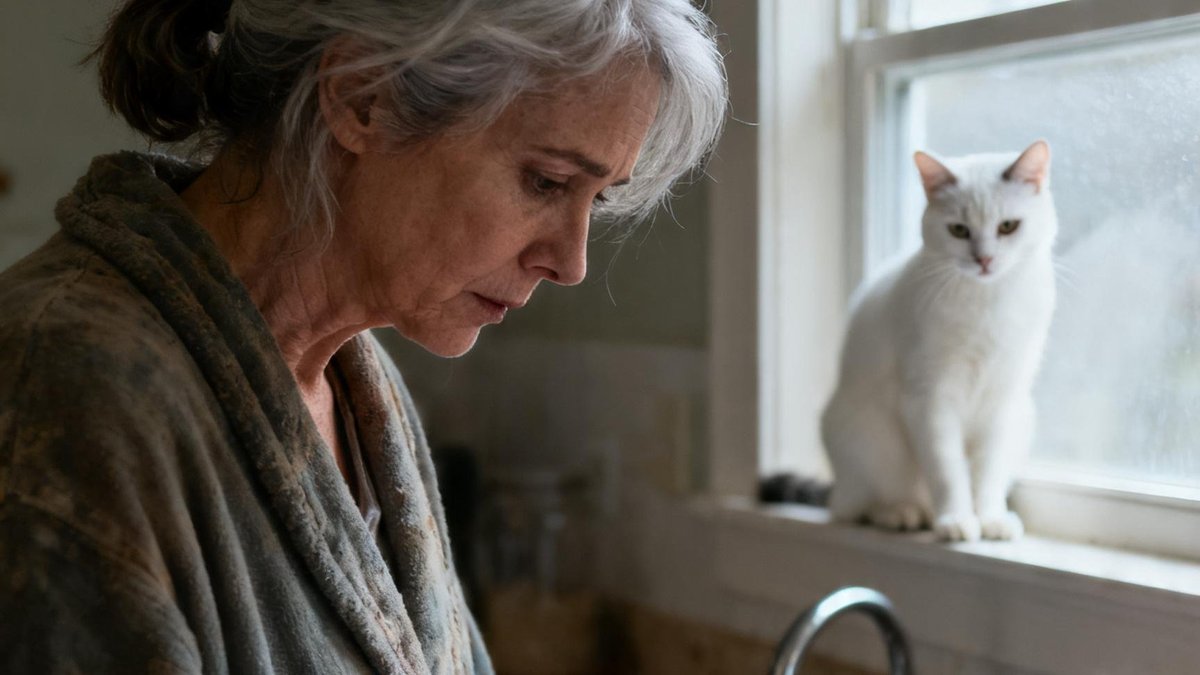
On a Sunday morning, thirty-one days after he left, my husband called to ask for money. I was standing in the kitchen with a mug of coffee that had gone cold an hour ago, watching the rain smear the window over the sink. His name flashed on the screen, and I let it ring three times. Four. I answered on the fifth.
“Julia, hey.” His voice was too careful, not the voice he used in our twenty years of marriage, more like the one he saved for the bank manager or the time he rear-ended a Prius on Burnside. “It’s Greg.”
“I know it’s you. I put you in my phone as ‘Greg.’”
A pause. The fridge hummed. Mochi, our cat, who’d always hated him, jumped down from the counter and trotted out of the room as if she recognized the sound of trouble.
“Look, I know this is… I don’t have a good way to ask this.”
“Then don’t.”
“I need fifteen thousand dollars. It’s for Saffron’s new practice. She’s opening a second location in the Pearl, and the contractor needs the deposit by Tuesday, and the credit union turned down the—”
I laughed. Not a chuckle, a real laugh that came from somewhere in my gut, and I couldn’t stop it. I put the mug down, pressed my palm flat on the counter, and let it roll out of me. He waited. I laughed until my eyes watered.
“Julia.”
“Greg,” I managed, still half-laughing, “you’re calling me, your wife of twenty years, who you walked out on last month after telling me you’d ‘finally awakened to your true light,’ to borrow fifteen grand for your girlfriend’s chakra studio.” I used air quotes he couldn’t see. “Do you even hear yourself?”
“It’s not a chakra studio. It’s a holistic wellness center. And it’s an investment. We’ll pay you back by summer.”
“You’ll pay me back with money I earned teaching teenagers algebra while you were between jobs three times in the last decade? With the emergency fund I built after you drained ours for that online trading course you never finished?”
The silence stretched. I could hear him breathing, a familiar rhythm I’d fallen asleep next to for nearly half my life. It triggered not sadness but a strange, clarifying anger, like stepping out of a warm theater into February rain.
“I can’t, Greg. The answer is no. Lose my number for a while.”
I ended the call and slid the phone across the counter. My hand was shaking, but my mind was sharp.
—
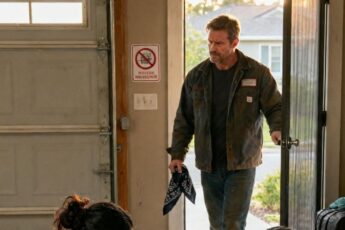
He’d left on a Wednesday evening in March, while the streetlights on Clinton Street flickered on one by one in the drizzle. I’d come home from school with a bag of grading and found him stuffing shirts into an old duffel bag. Not a suitcase, a duffel bag, like he was heading to the gym and might be back for dinner. Except he wasn’t.
“Saffron and I have been doing a lot of inner work,” he said, folding a sweater I’d bought him at a holiday market three years ago. “I’ve been unhappy, Jules. I’ve been sleepwalking.”
I leaned against the doorframe, still in my coat. “You’ve been sleeping just fine. You don’t hear your own snoring.”
He didn’t crack a smile. That was the first sign—Greg who used to laugh at my dumb jokes, who laughed at his own bad puns, now stood there solemn as a deacon. He told me Saffron was a breathwork facilitator he’d met at a weekend retreat in Hood River. He said she’d helped him access emotions he didn’t know he had. He said our marriage had become a set of routines, a “comfortable cage.” He said he was finally choosing to be free.
I didn’t scream or cry. I just stood there, and when he left, I listened to his truck back out of the driveway and disappear. Then I went to the kitchen, poured myself a whiskey, and looked at the clock. It was 7:47. Our son Dylan’s birthday was July 4th. I remember thinking, *seven forty-seven, that’s a lucky number or a terrible one, and I’m not sure which.*
The next day, I started baking sourdough.
I’d never baked bread in my life. Greg was the bread guy—he bought those artisan loaves from the co-op, bragged about the crust. But that Thursday, I walked to the store in the rain, bought a bag of flour and a glass jar, and began feeding a starter on the counter. I named it Eustace. Every morning at six, before school, I fed Eustace and watched the bubbles form. By the weekend, I’d produced four dense, ugly loaves. My neighbor Bev across the street got two. The janitor at Roosevelt High got one. The cat got a piece of the fourth and looked at me like I’d insulted her ancestors.
My colleague Val, who taught biology two doors down, cornered me in the staff lounge on Friday. “You’ve brought baked goods three days in a row. Plus you smell like a bakery. What’s happening?”
“Greg left.”
Val put down her kale salad. “The husband or the bacteria culture?”
“Both, kind of.” I told her about Saffron and the breathwork and the duffel bag. Val listened, then said, “My ex-husband left me for a woman who sold essential oils out of her trunk. He lost our entire savings buying a ‘distribution license.’ Greg’s going to come crawling back in about six weeks, and when he does, you remember this: he’s not your problem anymore.”
“He’s not coming back. He’s ‘awakened.’ He posts on Instagram now. Gratitude mantras and photos of himself standing in rivers.”
Val snorted. “River photos. That’s a stage five midlife crisis. Get a lawyer.”
—
Our son Dylan, who was a sophomore at CU Boulder, called me on a Tuesday night while I was watching a documentary about fungi and eating failed sourdough croutons. “Mom, have you seen Dad’s page? He posted something about ‘releasing attachment to past identities.’ I think he means us.”
“I saw.”
“He used a picture of us at Cannon Beach. He cropped you out and put a filter on it that makes the ocean look purple.”
“I know, sweetie. He’s exploring.”
Dylan was quiet. At twenty, he had my skeptical eyes and his father’s stubborn jaw. “She’s got him doing this weekend workshop thing, the Saffron woman. It costs three hundred dollars a person. He asked me if I wanted to come. To reconnect with my ‘inner child.’”
“What did you say?”
“I told him my inner child wants him to stop being embarrassing.” A pause. “Are you okay?”
“Eustace is hungry and I have thirty essays to grade, but yeah. I’m okay.”
Eustace, my starter, had become a sort of confidante. I talked to the jar more than I’d talked to Greg in the last year of our marriage.
—
Two days after the phone call, Dylan called again. “Dad hit me up for five thousand dollars. For what he called a ‘bridge loan’ for Saffron’s space. I told him my student loans ARE a bridge loan and I’m the one living on ramen. He hung up on me.”
I sat on the couch, the one Greg had insisted we buy because it reclined, even though it was too big for the living room and I’d hated it for eleven years. Mochi was curled on the armrest, asleep. “He asked me for fifteen.”
“Jesus. You didn’t give it to him, right?”
“No. I laughed until I cried and then I said no.”
“Good. What a tool.” Dylan rarely used words like that. It felt like a tiny victory.
—
The call from the former studio manager came on a Thursday afternoon, while I was eating a turkey sandwich in my classroom and pretending to review last week’s quiz results. The woman’s name was Rachel, and her voice had the hushed, urgent quality of someone who’d rehearsed the conversation in her car.
“Mrs. Cahill? I worked at Radiant Breath, Saffron’s studio on Hawthorne. I quit on Monday.”
“Okay.” I put down my sandwich. “Why are you telling me this?”
“Because your husband isn’t the first. He’s the fourth man Saffron has… moved in with the last three years. The first was a chiropractor named Mark. He invested forty grand in a sound bath room that never got built. When the money ran out, she thanked him for his ‘sacred contribution’ and sent him packing. The second was a retired firefighter from Bend—he sold his boat. Then there was a contractor in Salem who remodelled her studio for free. Your husband’s the fourth.”
I looked at the periodic table poster on my wall. The element for gold is Au. I thought of all the little gold bands tucked away in drawers. “How do you know all this?”
“I handled the accounts. And Saffron talks. She’s got a whole program called ‘Divine Masculine Investment.’ She gets them to empty their savings, and then she moves on. I couldn’t not say something, not after what happened to the firefighter’s grandkids.”
Rachel gave me her number, told me she’d talk to a lawyer if needed, and hung up. I sat in the empty classroom long after the final bell, until the janitor cracked the door and asked if I was still there. When I got home, I fed Eustace and then sat on the floor of my bedroom—*my* bedroom—and looked at the divorce papers I’d requested a week before but hadn’t been able to open. I opened them.
Greg filed his response three weeks later, full of hurt and confusion, but by then I’d already spoken to my sister-in-law, a family law attorney in Lake Oswego, and we had everything in motion. He tried to call me seven times. I let each one go to voicemail, then played them like a podcast while stirring my starter.
“Julia, I don’t know why you’re doing this. We can talk, we can be rational.” *Beep.* “Julia, Saffron says you’re operating from a place of fear, but she’s willing to mediate energetically.” *Beep.* “This isn’t about the money. I’ve been doing a lot of reflection, and I think maybe I made a mistake…” That one I almost picked up. But I remembered Val’s face, and Dylan’s voice calling him a tool, and the sound of my own laughter on that Sunday morning.
—
The divorce finalized in June, and by then I’d stopped baking quite so compulsively. I kept Eustace alive but gave away most of the loaves to the school cafeteria staff. On a Saturday in July, I walked into Whole Foods in the Pearl to grab a coffee, and there was Greg, standing by the deli counter holding a basket with a single frozen lasagna, a bag of pre-cut celery, and a six-pack of IPA.
He looked older. Not dramatically, but the way a house looks after a winter of neglect—faded paint, a sag in the gutter. His linen shirt was replaced by an old plaid one I recognized from our camping trips. His hair was longer, unshaven in a way that wasn’t intentional.
He saw me and froze. I walked over because, I don’t know, you can’t divorce twenty years of instinct.
“Julia.” He said my name like it was a question.
“Greg.”
He glanced at his basket, then at me. “The lasagna’s for my mom. She moved in with me. Temporarily.” He shuffled his feet. “Saffron took the house, and then the studio… it wasn’t what I thought.”
I nodded. I didn’t offer to hold space for his spiritual journey. I didn’t ask how his inner child was doing. I looked at the frozen lasagna and thought of all the Sunday dinners I’d made from scratch, the pies, the roast chickens, the pot roast he’d loved, and I felt a wave of something that wasn’t pity and wasn’t anger. Just a clean, gray distance.
“Well,” I said. “Take care of your mom.”
“Are you… do you think we could…” He didn’t finish.
I shook my head. Not unkindly. Just a single motion, like closing a book. Then I turned and walked toward the coffee bar. I could feel him watching me, but I didn’t look back.
Outside, the rain had stopped, and the pavement was steaming in the sudden July sun. I walked to my car, a ten-year-old Subaru with 140,000 miles and a bumper sticker Dylan had put there: *My other car is a TARDIS.* I sat in the driver’s seat for a minute, hands on the wheel, and then I drove home to feed Eustace. Mochi was waiting on the stoop, and when I opened the door, she meowed loudly, demanding food she didn’t need.
In the kitchen, I checked the starter, bubbling and alive, and thought about what I’d do with the next loaf. Maybe I’d try adding rosemary and sea salt. Or maybe I’d give it to the new neighbor two doors down, the one who always waved when I left for work. Something small. Something mine.