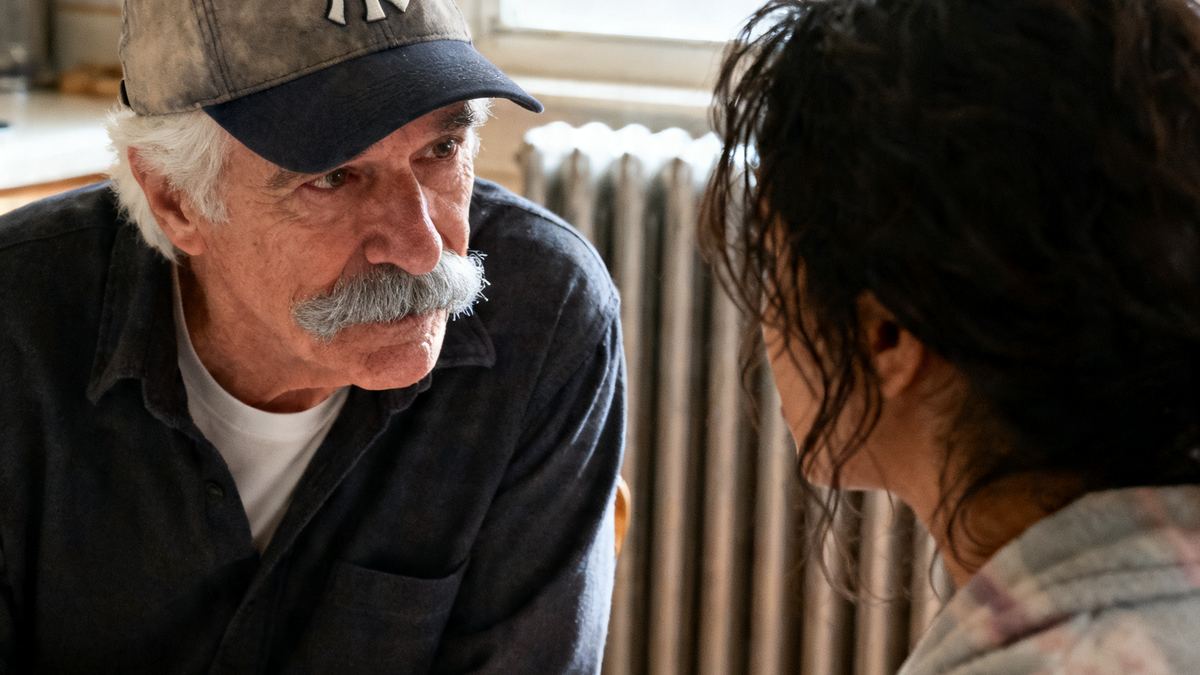
For four years, we shared a wall in a sagging brownstone in Brooklyn. Four years of the same cracked hallway tile I’d memorized under the fluorescent flicker. Four years of knowing absolutely nothing about him except that his name was Walter, he lived in 2A, and he always held the lobby door for people with his elbow when his hands were full. He was a short man in his late sixties with a neat gray moustache and a limp that got worse in November. When I went down with that brutal flu, the one that left me shaking under three comforters and too weak to even scroll my phone, it wasn’t my sister in Chicago or my college friends scattered across the boroughs who showed up. It was Walter. He knocked at 9 a.m. on a Saturday, and when I didn’t answer, he stood there for what must have been ten minutes, knocking again, softly. Finally, I shuffled to the door in my robe, gripping the wall. He took one look at me—hair plastered to my forehead, eyes glassy—and didn’t ask a single question. He just held up a brown paper bag from the bodega on the corner. “You’re gonna need someone to make soup,” he said. “And I make a mean soup.” He came every single afternoon for eight days. Not with fanfare, not with a running commentary about his own aches and pains. He came with meals in mismatched Tupperware. He placed my mail on the counter where I could see it. He took my garbage out without being asked. Once, I woke from a fever dream and heard him in my kitchen, humming a low, tuneless song, the spoon clinking gently against the pot. I didn’t even know the man’s last name, and there he was, washing my dishes. On the eighth day, the fever broke. I sat up, dizzy but human again, and the apartment was spotless. A fresh quart of orange juice sat on my nightstand. And tucked under a magnet shaped like the Statue of Liberty on my fridge was a yellowed, creased envelope. On the outside, in handwriting I didn’t recognize at first, it said: “From someone who once got a second chance. Thank you.” I pulled out the single sheet of paper inside. It was a photocopy of a postal money order receipt. The date on it was December 14, 2019. And the name on the “Sender” line was mine. My hand started trembling. I stared at that receipt, the fog of the last week swirling into something sharp and clear. 2019. That was the year I was temping at a mail room in Midtown, making barely enough to cover my half of the rent. I remembered a conversation I’d overheard a few days before Christmas. Walter, down in the lobby, his voice strained, talking to the super. I hadn’t meant to eavesdrop. He was saying something about his daughter, about a medical bill that had swallowed his entire pension check, about facing an eviction notice right before the holidays. I remembered the way his voice had cracked on the word “eviction,” and how he’d immediately cleared his throat and straightened his back, embarrassed. That night I’d gone home and looked at my own dwindling bank account. I thought about my own father, who’d raised me alone and never once let me see him scared. I had one hundred and eighty dollars to my name. I went to the post office the next morning and bought a money order for three hundred dollars. It was a stupid, reckless amount that I definitely did not have. I signed it “A neighbor,” tucked it in a blank envelope, and slid it under his door at 2 a.m. Then I went back upstairs and tried not to throw up from the anxiety of it. I forgot about the whole thing within a month. To me, it was a single impulsive decision in a long string of frantic New York years. A tiny blip on my personal radar that I’d buried under bills and breakups and a thousand subway commutes. But to Walter, it was the thing that kept a roof over his daughter’s head. When he came by that afternoon, I was sitting at the kitchen table holding the receipt. He didn’t knock. He had my spare key. He walked in, saw the paper in my hand, and just stopped in the doorway. For a moment, neither of us said anything. The radiator clanked. A siren wailed down on Atlantic Avenue. “You hid it in the freezer,” I said. My voice sounded like sandpaper. “Thought it’d be safe there,” he said. “People don’t look in the freezer unless they’re really cleaning.” “I forgot,” I said. “Walter, I swear to God, I completely forgot I did that. It was nothing.” He walked over and sat down across from me. He was wearing a faded Yankees cap, the brim frayed. He took it off and set it on the table, a gesture so deliberate it felt like a confession. “It wasn’t nothing,” he said. “You don’t get it. That week, I was done. I was sitting on my floor, looking at my service revolver from the force. Actual, physical done.” The word “revolver” hit me like cold water. I’d known Walter was retired NYPD, but I’d never thought about what he’d kept from the job. “Then I opened the door to take the trash out,” he continued, “and there was your envelope. Three hundred bucks even. No note, no name. Just a way out. I held that piece of paper and I swear to you, it was like somebody turned the lights back on in a room I didn’t even know had gone dark.” I couldn’t speak. I just stared at the grain of the table. “I spent a year trying to find out who did it,” he said. “Checked handwriting on the sign-up sheet in the laundry room. Watched how people wrote the ‘a’ in their names. I’m a trained detective, but it took me eighteen months. You left a rental application in the recycling bin once, with your old address on it. The same handwriting. I just needed the confirmation.” “And you never said anything?” “What was there to say? You didn’t want me to know. So I figured I’d repay you by keeping the secret,” he said. “And by waiting.” “Waiting for what?” He looked at me then, and the exhaustion in his eyes was gone, replaced by something steady and warm. “For you to need someone who makes a mean soup.” I don’t know what I expected him to say. I definitely didn’t expect to feel heat building behind my eyes, a pressure in my chest that made me want to fold into myself. I thought of all the years I’d passed him in the hall, nodding politely, thinking that we were strangers. Strangers with a shared wall, a shared lobby, a shared silence. I thought about how effortlessly we build these compartments for people—neighbor, acquaintance, guy in 2A—and how little it takes to tear the walls down. A piece of paper. A pot of soup. “I didn’t save you,” I said finally. “I just bought you a week.” “No,” he said. “You reminded me that someone I didn’t even know thought I was worth saving. That’s not a week. That’s everything.” We sat there in my kitchen as the afternoon light turned gold through the window, and I realized I was no longer waiting for him to leave. His presence in my apartment was no longer a favor being done. It was just a friend, sitting at my table, turning a baseball cap in his hands. Later that evening, we walked down to the bodega together. I was still shaky, gripping the railing, and he walked on the outside of the sidewalk, closer to the traffic, a cop’s habit. The guy at the counter, Hector, knew my name and Walter’s order without being asked. We bought two hot teas and a bag of DayQuil gels, and Walter told me a joke so terrible about a penguin and a mechanic that I laughed so hard I almost fell over. I didn’t pay him back. I never tried. Because that debt, the one we’d been silently racking up for four years, didn’t work like a loan. It worked like a pulse. Beating under the floorboards of a rundown building in Brooklyn, silent, invisible, keeping time until the moment one of us needed it to do more than just tick. And on a Saturday morning in February, when the body gives out and the pride gives up and the world shrinks to the size of your bedroom, a seventy-year-old retired detective with a limp knocked on the door with soup and didn’t ask any questions. He just knew.
The Yellow Envelope at the Bottom of My Freezer